
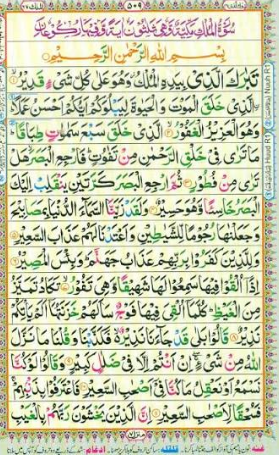
Surah Mulk is one of the well-known chapters of the Quran. It is the 67th surah and contains 30 verses. It is also called Surah Tabarak, based on its opening words, “Tabarak alladhi biyadihil-mulk.” The surah speaks about Allah’s complete authority, the beauty and order of creation, life and death, human responsibility, and the reality of the Hereafter.
For many Muslims, Surah Mulk has a special place in their daily Quran reading. A well-known hadith reported in Jami` at-Tirmidhi states that a 30-verse surah interceded for a man until he was forgiven, and identifies that surah as Tabarak alladhi biyadihil-mulk. The hadith is graded Hasan on the cited page.
At the same time, reading Surah Mulk should not be treated as a mere routine. Its verses ask the reader to think about who controls life, why human beings were created, what signs can be seen in the heavens, and what happens when people reject truth. Its message connects belief with reflection, gratitude, humility, and responsible living.
This article looks at Surah Mulk, its meaning, themes, virtues, lessons, and practical ways to read it with greater attention.
What Is Surah Mulk?
Surah Mulk is the 67th chapter of the Quran. It has 30 ayahs, or verses, and is classified as a Makkan surah. Quran.com identifies its central subjects as Allah’s sovereignty, the certainty of resurrection, the test of life and death, and warnings for those who reject faith.
The word Al-Mulk means “The Kingdom,” “The Dominion,” or “The Sovereignty.” The name comes from the first verse, which declares that all authority belongs to Allah.
The opening verse presents a powerful idea: human beings may control some things for a short time, but complete ownership and authority belong to Allah. This idea runs through the entire surah.
Basic Facts About Surah Mulk
| Detail | Information |
|---|---|
| Surah number | 67 |
| Name | Al-Mulk |
| Common name | Surah Mulk |
| Other name | Surah Tabarak |
| Number of verses | 30 |
| Revelation place | Makkah |
| Juz | 29 |
| Main subject | Allah’s sovereignty and human accountability |
| Opening phrase | Tabarak alladhi biyadihil-mulk |
| Ending subject | Human dependence on Allah for water |
Quran.com lists Surah Al-Mulk as a Makkan surah with 30 verses. It is placed in Juz 29 of the Quran.
Why Is Surah Mulk Called Surah Tabarak?
Surah Mulk is often called Surah Tabarak because it begins with the words:
“Tabarak alladhi biyadihil-mulk.”
The opening verse praises Allah and states that authority is in His hands. Quran.com also notes that the longer name is Surat Tabarak alladhi biyadihil-mulk, taken from the beginning of the surah.
The word “Tabarak” carries a sense of great blessing, glory, and exaltation. The verse directs attention toward Allah’s power over all things.
This opening prepares the reader for the themes that follow. The surah does not begin with human strength, wealth, status, or achievement. It begins with Allah’s authority.
That gives the chapter a clear spiritual direction: a person should understand his or her place in creation.
The Main Message of Surah Mulk
The central message of Surah Mulk is that Allah has complete authority over creation and that human beings are being tested through life.
The surah asks people to look at the world around them. It points toward the heavens, the earth, birds, food, water, and other signs of life. These examples remind people that the world is not without purpose.
Life is also presented as a test.
The second verse says that Allah created death and life to test which people are best in deeds. This gives a different way of thinking about success. Human life is not simply about gaining wealth, status, comfort, or recognition. It is also about how a person uses the life Allah has given.
Major Themes in Surah Mulk
| Theme | Message |
|---|---|
| Allah’s sovereignty | Allah has complete authority over creation |
| Life and death | Human life is a test of deeds |
| Creation | The heavens show order and signs of divine power |
| Accountability | People will answer for what they believe and do |
| Hellfire | The surah warns those who reject truth |
| Gratitude | Food, hearing, sight, and other blessings should be recognized |
| Trust in Allah | Human beings remain dependent on their Creator |
| Water | The final verse reminds people that even water is a divine blessing |
These themes are connected. Belief in Allah’s authority should lead to awareness of human responsibility.
Surah Mulk and the Power of Allah
The first part of Surah Mulk strongly focuses on Allah’s power.
The opening verse says that authority is in Allah’s hands and that He has power over everything. The following verses describe the creation of the heavens and encourage people to look again and again at the sky.
The message is simple: look carefully at creation.
The Quran asks whether the observer can find a flaw or break in Allah’s creation. It then tells the reader to look again.
This repeated invitation to observe is important. Faith in the Quran is not presented as a reason to stop thinking. Instead, the reader is encouraged to use sight, reason, and reflection.
Surah Mulk and the Seven Heavens
Verse 3 refers to the creation of seven heavens arranged in layers. It then asks the reader to look at the creation of the Most Merciful and consider whether any serious flaw can be seen.
Classical tafsir works discuss these verses in relation to the order and perfection of Allah’s creation. Quran.com’s presentation of Ibn Kathir explains the passage as an invitation to look at the heavens and search for cracks or defects.
The lesson for a modern reader is not simply to look at the sky for scientific facts. The wider Quranic point is spiritual: creation should lead a person toward humility and recognition of the Creator.
Looking Again
One of the striking ideas in the early verses is the instruction to look again.
A person may look at something and think he understands it. But the Quran asks the reader to return his gaze.
This teaches patience in reflection.
Instead of rushing through the verses, a reader can pause and ask:
- What does this verse teach about Allah?
- What does it teach about human weakness?
- What blessing am I taking for granted?
- How should this belief change my actions?
These questions can make Quran reading more thoughtful.
Surah Mulk and the Purpose of Life
Surah Mulk presents life and death as part of a test.
This does not mean that every difficulty has a simple explanation. Rather, it reminds believers that life has a moral purpose.
People are given choices.
The surah therefore shifts attention from simply asking, “How much do I have?” to asking, “What am I doing with what I have?”
What Does “Best in Deeds” Mean?
The second verse refers to who is best in deeds.
This idea is important because the wording does not simply focus on who performs the greatest number of deeds. Good actions also involve sincerity, obedience, and moral quality.
A small good action done sincerely can have great spiritual value.
For a Muslim, this can affect everyday behavior:
- Speaking truthfully
- Helping parents
- Caring for family
- Giving charity
- Avoiding injustice
- Keeping promises
- Praying regularly
- Asking Allah for forgiveness
- Treating other people fairly
Surah Mulk therefore connects belief with conduct.
Surah Mulk and Reflection on Creation
The surah repeatedly directs attention toward the world.
Birds are mentioned as an example. They spread and fold their wings while flying, yet they remain dependent on Allah.
This gives the reader an important reminder: people may have skills, tools, knowledge, and resources, but they remain dependent on their Creator.
The point is not that human effort is useless. Islam encourages responsible effort. The lesson is that effort should be accompanied by awareness of Allah.
What Surah Mulk Teaches About Birds
The passage about birds invites people to consider how creatures survive.
A bird does not control every part of the world around it. It still depends on food, air, space, and conditions that are beyond its full control.
The Quran uses this familiar sight to direct the heart toward Allah.
This is one reason the surah remains relevant. Its examples do not depend on one period of history. A person can read the same verses while living in a modern city and still reflect on the natural world.
Surah Mulk and the Hereafter
Another major subject in Surah Mulk is the Hereafter.
The surah warns those who reject Allah and describes the regret of people who failed to respond to the warning.
The discussion of Hell is serious. The Quran presents punishment as a real consequence of rejection and wrongdoing.
At the same time, the surah encourages the reader to think before it is too late.
The Question of Accountability
Surah Mulk teaches that human beings are not free from responsibility.
A person may hide actions from other people, but Allah knows what is hidden and what is openly done.
This creates a strong sense of moral awareness.
A believer can use this teaching to develop honesty even when nobody else is watching.
That principle can influence school, work, business, family life, online behavior, and private decisions.
Surah Mulk and the Fear of Allah
Surah Mulk describes those who fear their Lord even when they cannot see Him.
This points toward a form of faith that exists beyond public attention.
A person does not worship Allah only because other people are watching. Worship also comes from an inner awareness of Allah.
This can help develop sincerity.
For example, a person may choose honesty in a situation where lying would bring a personal advantage. The decision becomes an act of faith because the person remembers Allah’s knowledge and judgment.
Fear and Hope in Islam
Fear of Allah should not be understood as hopelessness.
Islamic teaching combines fear, hope, love, repentance, and trust.
Surah Mulk warns about punishment, but its message also directs people toward recognition of Allah’s power and mercy.
The proper response to a warning is not despair. It is correction.
A person who realizes that he has made mistakes can turn back to Allah, seek forgiveness, and improve his conduct.
Virtues of Surah Mulk
Surah Mulk is widely known for its reported virtues.
One of the strongest commonly cited reports is found in Jami` at-Tirmidhi 2891. Abu Hurairah reported that the Prophet Muhammad ﷺ described a 30-verse surah that interceded for a man until he was forgiven, identifying it as Surah Tabarak alladhi biyadihil-mulk. The cited Sunnah.com entry grades this report Hasan.
This hadith gives Surah Mulk a special place among Quranic chapters.
It is important, however, to distinguish between reliable reports and popular claims that may circulate online.
Does Surah Mulk Protect From Punishment in the Grave?
A report concerning Surah Mulk as a protector from punishment in the grave is also found in Jami` at-Tirmidhi. The Sunnah.com page identifies the report as Da’if according to its displayed Darussalam grading.
Because of this grading difference, claims about guaranteed protection from grave punishment should be presented carefully.
The stronger point that can be stated from the cited source is that a Hasan hadith reports intercession for the reader of this 30-verse surah until forgiveness.
Muslims should also remember that Quran recitation is not meant to replace repentance, prayer, good conduct, or obedience to Allah.
Is Reading Surah Mulk Every Night Recommended?
Many Muslims make Surah Mulk part of their night routine.
There is a strong tradition in Muslim communities of reading it before sleeping. The practice can be spiritually useful because the surah encourages reflection on death, accountability, creation, and Allah’s authority.
However, a person should avoid turning a voluntary routine into a claim that every Muslim is legally required to read it every night unless there is sound evidence for that specific obligation.
A healthy routine can be simple:
- Make wudu if convenient.
- Read Surah Mulk calmly.
- Think about its meaning.
- Ask Allah for forgiveness and guidance.
- Try to apply one lesson in daily life.
The value of the practice is not only in finishing the 30 verses. Understanding and acting upon the Quran are also important.
When Is the Best Time to Read Surah Mulk?
There is no need to restrict Quran reading to one moment if a person wishes to read the surah at another suitable time.
Many people prefer reading Surah Mulk at night because of its connection with personal reflection and the common practice of including it in a bedtime routine.
A reader can choose a time when concentration is easier.
For some people, that may be:
- After Isha prayer
- Before going to bed
- During personal Quran study
- After a daily prayer
- During a quiet period in the evening
The most useful time is often the time when a person can read with attention and understanding.
Surah Mulk: A Verse-by-Verse Overview
Surah Mulk has 30 verses, but its message can be understood through several connected sections.
| Verses | Main focus |
|---|---|
| 1–2 | Allah’s authority and the purpose of life and death |
| 3–5 | Creation of the heavens and signs of divine power |
| 6–11 | Warning, Hellfire, and regret of those who reject truth |
| 12–15 | Allah’s knowledge, gratitude, and dependence on Him |
| 16–18 | Warning about security, punishment, and earlier peoples |
| 19–23 | Birds, provision, hearing, sight, and human dependence |
| 24–27 | Resurrection and the reaction of those who denied it |
| 28–30 | Human weakness and dependence on Allah, including water |
This structure shows how the surah moves between signs of creation, warnings, blessings, and accountability.
Lessons From Surah Mulk for Daily Life
Surah Mulk is not only a chapter to recite. Its ideas can influence everyday life.
Be Humble
The opening verses remind people that Allah owns all authority.
This can reduce pride.
A person may have money, education, popularity, or professional success. Yet all of these are temporary.
Remembering Allah’s authority can help a person remain humble.
Be Thankful
The surah reminds people about blessings such as hearing and sight.
These are easy to take for granted.
A person can practice gratitude by recognizing everyday blessings:
- Clean water
- Food
- Family
- Health
- Safety
- Knowledge
- Time
- Ability to work
- Ability to worship
Gratitude is more than saying “thank you.” It also means using blessings responsibly.
Think About Death
Surah Mulk begins its discussion of life by mentioning death.
Death is not presented simply as an end. It is connected with accountability.
Thinking about death can help a person put daily problems into perspective.
It can encourage better choices and reduce attachment to temporary worldly status.
Avoid False Security
The surah warns people not to assume they are completely safe from Allah’s judgment.
Modern life can create a sense of control. Technology, money, buildings, medicine, and systems can provide many forms of protection.
Yet human beings remain vulnerable.
Surah Mulk reminds the reader that real security belongs to Allah.
The Final Verse of Surah Mulk
The final verse contains one of the surah’s strongest reminders.
It asks what would happen if a person’s water disappeared deep into the earth and who could then bring flowing water.
Quran.com translates the verse as:
“Say, ‘Consider this: if your water were to sink ˹into the earth˺, then who ˹else˺ could bring you flowing water?’”
The question is simple but powerful.
People depend on water every day. Without it, life becomes impossible.
The verse reminds humans that even something as ordinary as water is a blessing.
Why Does Surah Mulk End With Water?
The ending brings the message down to something every person understands.
The surah begins with Allah’s authority over the entire kingdom. It ends by reminding humans that they cannot even guarantee access to something as basic as water.
This creates a strong connection between the beginning and the end.
At the beginning, Allah owns everything.
At the end, human dependence becomes impossible to ignore.
The final verse therefore encourages humility and gratitude.
Surah Mulk and Modern Life
Although Surah Mulk was revealed in Makkah, its message remains relevant.
Modern people often have more tools than earlier generations, but tools do not remove dependence on Allah.
A person may use technology to communicate, study, earn money, or travel. Yet life still depends on factors outside human control.
The surah encourages people to recognize this reality without abandoning responsible action.
A Muslim can study science, work hard, plan for the future, and use modern technology while still recognizing Allah as the ultimate Creator and Owner.
Surah Mulk and Personal Responsibility
The surah also has a strong moral message.
If life is a test, then choices matter.
This can change the way someone approaches:
- Money
- Relationships
- Work
- Education
- Speech
- Social media
- Family duties
- Charity
- Personal habits
The goal is not perfection. Human beings make mistakes. The goal is to respond to mistakes with repentance and improvement.
How to Read Surah Mulk With Understanding
Reading the Quran in Arabic is an important act of worship for Muslims. At the same time, understanding the message can deepen reflection.
A simple method can help.
Read the Arabic
Begin by reading the Arabic text if you are able.
Read a Reliable Translation
Then read a trusted English translation.
Read Short Tafsir
Tafsir can provide background and explain difficult words or ideas.
Pause at Important Verses
Do not feel pressured to rush.
For example, after reading the verses about life and death, pause and think about the purpose of your own life.
Apply One Lesson
Choose one lesson and use it in your daily routine.
This turns Quran reading from a purely reading-based activity into a source of personal change.
Common Misunderstandings About Surah Mulk
Several claims about Surah Mulk are common in conversations and online posts. They should be handled with care.
“Reading It Guarantees Paradise”
The hadith about a 30-verse surah interceding until forgiveness is authentic enough, according to the cited Tirmidhi grading, to support its virtue.
However, this should not be turned into a simplistic idea that a person can ignore faith and good actions because they read one surah.
The Quran as a whole teaches worship, obedience, repentance, justice, mercy, and accountability.
“It Is Only for Bedtime”
Many Muslims read Surah Mulk at night, but Quran recitation is not limited to bedtime.
A person can read it at a suitable time during the day as well.
“You Must Understand Every Word Before Reading”
Understanding is valuable, but a person should not stop reciting the Quran simply because his Arabic knowledge is limited.
Read the Arabic, learn the meaning gradually, and ask qualified teachers when difficult points arise.
Surah Mulk and Spiritual Reflection
One of the most useful ways to approach Surah Mulk is to treat it as a conversation with the heart.
The surah asks questions.
What happens after death?
What will a person say when standing before Allah?
These questions encourage self-reflection.
A person who regularly thinks about them may become more aware of his choices.
A Simple Reflection Plan
| Day | Reflection topic |
|---|---|
| Day 1 | Allah’s authority |
| Day 2 | Purpose of life |
| Day 3 | Creation of the heavens |
| Day 4 | Accountability |
| Day 5 | Allah’s knowledge |
| Day 6 | Gratitude for blessings |
| Day 7 | Dependence on Allah |
This is not a religious requirement. It is simply a practical study method.
The Importance of Reliable Islamic Sources
When learning about Surah Mulk, readers should separate Quranic text from later explanations and from unsupported internet claims.
Quran.com provides the Arabic text, translations, tafsir resources, and surah information. Its Surah Mulk page identifies the chapter as number 67, with 30 verses and a Makkan classification.
For hadith, readers should check the original collection and grading rather than relying only on social media graphics.
The Tirmidhi report about the 30-verse surah is one example. The cited page identifies it as Hadith 2891 and grades it Hasan.
This approach helps prevent religious information from being repeated without context.
Frequently Mentioned Benefits of Surah Mulk
The reported virtue of Surah Mulk is connected to intercession and forgiveness in the hadith mentioned above.
Beyond that report, the surah offers many spiritual lessons through its content.
It can remind a person to:
- Trust Allah
- Be grateful
- Think about death
- Prepare for accountability
- Observe creation
- Avoid arrogance
- Remember human weakness
- Seek forgiveness
- Improve personal conduct
These lessons are not separate from the Quranic message. They arise naturally from the themes of the surah.
Surah Mulk in a Muslim’s Daily Routine
A daily Quran routine does not need to be difficult.
Someone who wants to include Surah Mulk can begin with a few minutes each evening.
A possible routine is:
The routine can be adjusted according to a person’s schedule.
The important point is consistency without turning the practice into a burden.
What Parents Can Teach Children From Surah Mulk
Parents and teachers can use simple parts of Surah Mulk to introduce children to important Islamic ideas.
Children can learn that:
- Allah created the heavens.
- Allah gives people blessings.
- Life has a purpose.
- People should be thankful.
- Allah knows what people do.
- People should prepare for the Hereafter.
- Human beings need Allah.
Rather than asking children to memorize difficult explanations, adults can use simple questions.
For example:
“What blessings did Allah give you today?”
“What do you see in the sky?”
“Why should we be thankful for water?”
“How can we do good deeds today?”
These questions connect Quranic lessons with everyday life.
Surah Mulk and Gratitude for Water
The final verse deserves special attention because water is one of the most basic needs of human life.
People often notice the value of water most clearly when it is unavailable.
Surah Mulk asks readers to imagine their water sinking into the earth and then asks who could bring flowing water back.
This is a lesson in gratitude.
The next time a person drinks water, he can remember that the ability to access water is itself a blessing.
That simple thought can turn an ordinary action into an opportunity for remembrance.
Surah Mulk: A Message of Faith and Responsibility
Surah Mulk combines belief with responsibility.
A reader should not approach it only as a source of comfort. It is also a call to wake up, think, repent, and live with purpose.
Conclusion: Why Surah Mulk Matters
Surah Mulk is a 30-verse Makkan chapter of the Quran that centers on Allah’s sovereignty, creation, life and death, accountability, and human dependence on the Creator.
At the same time, readers should be careful with claims about Surah Mulk that go beyond the evidence. One report concerning protection from punishment in the grave is graded Da’if on the cited Sunnah.com page, so such claims should not be presented as certain without qualification.
The most lasting benefit of Surah Mulk is found not only in reciting its words but also in responding to its message.
It asks us to recognize Allah’s authority, value His blessings, remember death, prepare for accountability, avoid pride, and live with gratitude.
The final question about water brings the whole surah into everyday life: if something as basic as water is beyond our complete control, then human beings have many reasons to remain humble before their Creator.
For anyone beginning a regular Quran routine, Surah Mulk can be a meaningful chapter to read, understand, reflect upon, and apply. Its 30 verses offer reminders about faith, responsibility, gratitude, and the life to come.
FAQs About Surah Mulk
What is Surah Mulk?
Surah Mulk is the 67th chapter of the Quran. It contains 30 verses and is classified as a Makkan surah. Its central themes include Allah’s sovereignty, creation, life and death, resurrection, accountability, and human dependence on Allah.
What are the benefits of reading Surah Mulk?
A Hasan hadith recorded in Jami` at-Tirmidhi states that a 30-verse surah interceded for a man until he was forgiven and identifies that surah as Surah Tabarak, meaning Surah Mulk.
When should I read Surah Mulk?
Many Muslims read Surah Mulk at night or before sleeping. It can also be read at other suitable times. The important part is to recite the Quran with sincerity and, when possible, reflect on its meaning.
Why is Surah Mulk called Surah Tabarak?
It is called Surah Tabarak because its first words are “Tabarak alladhi biyadihil-mulk.” The name Al-Mulk refers to sovereignty or dominion, which is also the main idea introduced in its opening verse.
What is the main lesson of Surah Mulk?
The surah teaches that Allah has complete authority over creation and that human life has a purpose and involves accountability. It encourages people to observe creation, recognize blessings, remember the Hereafter, and live responsibly before Allah.