

In this detailed Jensen Huang biography, we cover his early life, family background, education, marriage, children, NVIDIA career, leadership style, estimated net worth, salary, achievements, philanthropy, and influence on artificial intelligence. We also explain how his wealth is connected to NVIDIA stock and why financial estimates can change with the market.
Jensen Huang Wiki and Biography
| Profile Detail | Information |
|---|---|
| Full Name | Jen-Hsun Huang |
| Popular Name | Jensen Huang |
| Date of Birth | February 17, 1963 |
| Age in 2026 | 63 years old |
| Birthplace | Tainan, Taiwan |
| Nationality | American |
| Profession | Engineer, Entrepreneur, Business Executive |
| Famous For | Co-founding and leading NVIDIA |
| Company | NVIDIA Corporation |
| Position | Founder, President, and CEO |
| Education | Oregon State University and Stanford University |
| Field of Study | Electrical Engineering |
| Wife | Lori Huang |
| Children | Two |
| Net Worth | Changes with NVIDIA’s share price and asset valuations |
| Primary Source of Wealth | NVIDIA shares and business interests |
| Industry | Semiconductors, GPUs, AI, and Computing |
| Official Company Website | NVIDIA.com |
| Official Biography | NVIDIA Newsroom |
The profile above summarizes commonly searched facts about Jensen Huang. His exact net worth is not a fixed personal statistic because much of his wealth is connected to publicly traded NVIDIA shares. For the latest available estimate, readers should consult a dated financial profile such as Forbes’ Jensen Huang profile and compare it with other financial sources.
Who Is Jensen Huang?
Jensen Huang is the co-founder, president, and CEO of NVIDIA, a company known for developing GPUs, computing platforms, and technology used in artificial intelligence. He founded NVIDIA with Chris Malachowsky and Curtis Priem in 1993. Since its early years, the company has developed products for computer graphics, gaming, professional visualization, scientific computing, data centers, and AI workloads.
Huang’s career is significant because NVIDIA’s technology evolved beyond its original focus on graphics. GPUs are capable of performing many calculations simultaneously, making them useful for tasks that benefit from parallel processing. This capability became increasingly valuable in fields such as machine learning, deep learning, scientific simulation, and large-scale computing.
As CEO, Huang has overseen NVIDIA’s transformation into a company that supplies not only chips but also software, networking technologies, complete computing systems, and tools for developers. Its products are used across several industries, including cloud computing, healthcare research, automotive technology, robotics, and enterprise software.
For verified details about his position and professional history, visit NVIDIA’s official Jensen Huang biography.
Jensen Huang Age and Date of Birth
Jensen Huang was born on February 17, 1963, in Tainan, Taiwan. He turned 63 years old on February 17, 2026. His age is a frequently searched part of his biography because his career spans several important periods in the development of personal computing, computer graphics, and artificial intelligence.
Huang began his professional journey in the semiconductor industry during the 1980s. At that time, computing technology was developing rapidly, but the modern GPU and AI markets had not yet emerged in their current forms. His early engineering experience gave him exposure to the technical and commercial challenges of semiconductor manufacturing and product development.
Over the following decades, Huang helped guide NVIDIA through changes in consumer computing, gaming, scientific research, and enterprise technology. His career illustrates how long-term engineering investment can create opportunities when the wider technology market changes.
Jensen Huang Height and Physical Appearance
Jensen Huang’s height is a common search query, especially among readers who enjoy celebrity-style biographies. However, a reliable and consistently confirmed height measurement is not clearly established in the primary sources used for this article. Publishing an unverified number would risk giving readers inaccurate information.
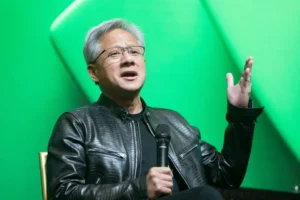
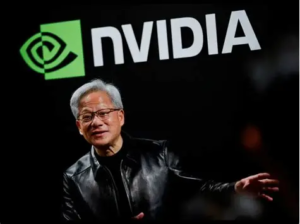
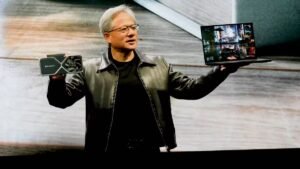
Huang is widely recognized for his public appearance at NVIDIA conferences and technology announcements. He frequently wears a black leather jacket during presentations, making it a familiar part of his public image. His appearances often include demonstrations of new computing systems, AI platforms, graphics technologies, and future product plans.
Unlike entertainment celebrities, Huang is primarily known for his work in engineering and business. For that reason, his professional achievements, technology strategy, and leadership of NVIDIA are more useful biographical subjects than unverified physical details.
Jensen Huang Early Life and Childhood
Jensen Huang was born in Taiwan and spent part of his childhood in Thailand before moving to the United States. His early life involved adapting to different environments and educational settings. These experiences form an important part of his background and help explain how his path eventually led to American engineering education and Silicon Valley.
According to biographical accounts, Huang and his brother were sent to the United States while the family considered the wider political and social circumstances in the region. Huang’s childhood experiences in America were not always easy. Some accounts describe his early time at a boarding school in Kentucky, where he faced unfamiliar surroundings and had to adjust to a new culture.
These experiences are often included in profiles of Huang because they provide context for his later career. However, a successful business career cannot be explained by childhood experiences alone. His engineering education, professional training, co-founders, employees, technology decisions, and the broader evolution of the computing market also played important roles.
For a summary of his early life and background, see Jensen Huang’s biographical overview on Wikipedia and the official NVIDIA executive biography.
Jensen Huang Education and Engineering Background
Education played a major role in Jensen Huang’s career. He earned a bachelor’s degree in electrical engineering from Oregon State University and later completed a master’s degree in electrical engineering at Stanford University. These qualifications provided a technical foundation for his work in semiconductors and computing systems.
Electrical engineering covers areas such as electronic circuits, semiconductor devices, signal processing, computer hardware, and the design of complex technical systems. These fields are relevant to the development of processors and the hardware platforms that power modern computers.
Huang’s engineering background also distinguishes his career from that of business leaders who entered technology through finance or management alone. His experience in engineering helped him understand the underlying technology while his later executive responsibilities required him to manage product strategy, investment, partnerships, and company growth.
Oregon State University
Huang completed his undergraduate electrical engineering degree at Oregon State University. The university became an important part of his personal and professional story. He met his future wife, Lori, while they were students there, and he later supported engineering education through philanthropy connected to the institution.
His undergraduate education gave him a foundation in the principles needed to understand electronic systems and semiconductor technology. These skills became relevant as he entered the technology industry and eventually helped establish NVIDIA.
Stanford University
After his undergraduate studies, Huang earned a master’s degree in electrical engineering from Stanford University. Stanford’s strong connections to research, engineering, and the technology industry placed him in an environment closely connected to Silicon Valley’s innovation ecosystem.
Graduate engineering study can involve deeper technical work and advanced approaches to solving complex problems. Huang’s Stanford education formed another part of the technical background he brought to his career in chip design and computing technology.
His degrees are listed in NVIDIA’s official biography, available at NVIDIA Newsroom.
Jensen Huang Wife: Who Is Lori Huang?
Jensen Huang is married to Lori Huang. Biographical accounts report that the couple met while studying at Oregon State University, where they were engineering lab partners. Their relationship began before Huang became a globally recognized technology executive and before NVIDIA developed into a major semiconductor company.
Lori Huang generally maintains a lower public profile than her husband. While Jensen appears regularly at company announcements, investor events, and technology conferences, the couple’s family life is not the central focus of his public role. As a result, information about their relationship should be limited to details that are reliably reported.
Their long-standing relationship is often included in articles about Jensen Huang’s personal life because it began during his university years. It also provides a glimpse into his life before NVIDIA became an internationally recognized company.
Jensen Huang Children and Family Life
Jensen and Lori Huang have two children. The family has generally kept many details of their private lives away from the spotlight, even as Huang has become one of the most visible executives in the technology sector.
Readers searching for Jensen Huang’s family may encounter personal details repeated across websites. Such details should be checked against credible reporting before publication, especially when they concern family members who do not hold public executive roles.
Huang’s professional life involves leading a company operating across global markets and technology sectors. His public schedule includes product announcements, engineering discussions, customer meetings, and strategic planning. However, specific claims about how he manages his private time should not be presented as fact unless supported by reliable sources.
Jensen Huang Career Before NVIDIA
Before co-founding NVIDIA, Jensen Huang worked at Advanced Micro Devices (AMD) and LSI Logic. NVIDIA’s official biography identifies both companies as part of his professional background. These roles gave him experience in the semiconductor sector before he launched his own company.
AMD is known for developing processors and other computing products, while LSI Logic was involved in semiconductor technology. Working in this environment allowed Huang to gain experience with engineering teams, product development, and the commercial challenges of bringing chips to market.
Starting a semiconductor business requires more than an idea. Companies must make substantial investments in engineering, product design, manufacturing relationships, testing, software support, and customer partnerships. Huang’s earlier experience gave him useful context for the challenges that would follow when he and his co-founders established NVIDIA.
When Did Jensen Huang Found NVIDIA?
Jensen Huang co-founded NVIDIA in 1993 with Chris Malachowsky and Curtis Priem. The company initially focused on graphics technology for computers. Its early ambitions centered on improving the visual computing experience, especially as personal computers became more capable and demand for advanced graphics increased.
The graphics market required specialized hardware capable of processing visual information efficiently. NVIDIA pursued this opportunity through graphics processors and related technology. Over time, the company’s work expanded beyond rendering images to include broader forms of parallel computing.
Building NVIDIA required long-term investment and decisions about which technical opportunities to pursue. The company faced competition and the uncertainty that comes with developing new products in a rapidly changing industry. Its later expansion into AI computing was built on years of work in processors, software, and accelerated computing.
Jensen Huang as NVIDIA CEO
Huang has served as NVIDIA’s president and chief executive officer since the company’s founding. His leadership has covered several major shifts in computing, including the growth of PC graphics, gaming GPUs, professional visualization, high-performance computing, data-center accelerators, and AI systems.
The CEO role involves more than overseeing product releases. It includes setting company priorities, allocating resources, working with business partners, communicating with investors, and coordinating teams responsible for hardware, software, manufacturing, and customer support.
NVIDIA’s business now includes products and services for a wide range of users. Gaming customers use its graphics products, researchers use its computing platforms for scientific workloads, and businesses use its hardware and software to support AI applications and data-center operations.
Huang’s role at NVIDIA is documented on the company’s official leadership page.
Jensen Huang and GPU Technology
A graphics processing unit, commonly known as a GPU, is a processor designed to handle many operations in parallel. GPUs became popular for rendering graphics in video games and professional applications. Their ability to process many calculations simultaneously later made them useful for scientific computing, simulation, and artificial intelligence.
NVIDIA has played a significant role in developing GPU technology and the software ecosystem around it. Hardware alone is not enough to create a successful computing platform. Developers also need tools, libraries, documentation, and software environments that help them use processors effectively.
This combination of hardware and software has helped GPUs expand into fields beyond gaming. GPUs can accelerate workloads that involve large-scale mathematical operations, including neural network training, image processing, scientific modeling, and data analysis.
Jensen Huang and Artificial Intelligence
Artificial intelligence has become one of the most important areas of NVIDIA’s business. AI systems often require substantial computing power to train models, process information, and respond to user requests. GPUs are well suited to many of these workloads because they can perform large numbers of calculations in parallel.
NVIDIA provides more than individual chips. Its AI computing platforms can include GPUs, networking equipment, complete server systems, and software tools used by researchers and companies. This broader approach helps customers build infrastructure for AI training, inference, and other demanding computing tasks.
Huang has frequently discussed accelerated computing as a major shift in how computers are built and used. As businesses experiment with generative AI, robotics, digital simulation, and automated workflows, demand for computing resources has become an important topic for technology companies and investors.
However, the growth of AI should not be interpreted as a guarantee of future results. Technology markets can change, competitors can develop alternative products, and customer spending can fluctuate. NVIDIA’s long-term performance will depend on its ability to continue delivering useful technology and responding to market demand.
What Is Jensen Huang Known For?
Huang is best known for co-founding NVIDIA and leading its development into a major provider of GPU and accelerated computing technology. He is also associated with the expansion of GPU computing into AI, where graphics processors and supporting software are used to train and operate machine-learning systems.
His public profile includes engineering leadership, long-term product strategy, and presentations at NVIDIA events. He often explains complex technology concepts to developers, business leaders, investors, and general audiences.
His influence is most clearly understood through NVIDIA’s products and business development rather than through a single title or award. The company serves multiple markets, and its technologies are used in both consumer products and large-scale computing infrastructure.
Jensen Huang Net Worth in 2026
Jensen Huang’s net worth is closely connected to his ownership stake in NVIDIA. Because NVIDIA is publicly traded, its share price changes during market trading. Those changes affect the estimated value of shares held by Huang and therefore influence the net worth figures published by financial outlets.
Forbes and Bloomberg publish billionaire profiles that estimate the wealth of major business figures. Their figures can differ because of timing, valuation methods, information available about assets, and changes in the market. Any exact number should therefore be presented with the source and the date on which it was reported.
Forbes’ profile displayed an estimated net worth of approximately $187.6 billion on October 21, 2026. This is a dated estimate, not a permanent value or a guaranteed amount of cash. Readers should check the live profile for the latest available figure before publishing an updated number.
Visit Forbes’ Jensen Huang net worth profile and Bloomberg’s billionaire profile for current estimates and additional financial context.
How Did Jensen Huang Build His Wealth?
Huang built much of his wealth through his ownership in NVIDIA. When the company expanded its business and its market value increased, the value of his shares also rose. The growth of gaming GPUs, data-center computing, and AI-related technology has been important to the company’s business development.
Unlike an employee whose wealth primarily comes from wages, a founder who retains shares in a publicly traded company can see personal wealth change significantly as the company’s market value moves. If the share price rises, the estimated value of the founder’s holdings may increase. If the share price falls, the estimate can decrease.
Huang’s financial story is therefore closely tied to NVIDIA’s business performance, share ownership, and the market’s expectations for future growth. A reported billionaire net worth should not be confused with money available in a bank account. It is an estimate of assets, including investments, that can change in value.
Jensen Huang Salary and Compensation
Jensen Huang’s salary is different from his total net worth. As CEO of a publicly traded company, his annual compensation may include a base salary, stock awards, cash incentives, and other benefits. The value and composition of that compensation can vary by year.
For a reliable figure, readers should consult NVIDIA’s annual proxy statement and regulatory filings with the U.S. Securities and Exchange Commission. These documents explain executive compensation and provide a more dependable basis for reporting than unsourced salary estimates.
Stock-based compensation can also create confusion in articles about technology executives. The reported value of an award at the time it is granted may differ from its later market value. It is important to distinguish compensation reported for a particular year from the current value of shares the executive already owns.
For official company financial information, visit NVIDIA Investor Relations.
Jensen Huang NVIDIA Shares and Ownership
Huang’s ownership in NVIDIA is an important part of how financial publications estimate his wealth. Forbes has reported that he owns a significant minority stake in the company. The exact percentage and value can change as a result of share sales, stock awards, company transactions, and other changes in ownership.
Owning shares does not mean that an executive owns the entire company. NVIDIA is publicly traded, meaning its stock is held by many investors, including individuals, institutions, funds, and company insiders. Huang’s leadership position and ownership stake are separate facts, although both are relevant to his business profile.
Investors researching NVIDIA should distinguish company market capitalization from Huang’s personal net worth. Market capitalization represents the market value of all outstanding shares of a company, while net worth is an estimate of an individual’s assets minus liabilities. These figures measure different things and should not be used interchangeably.
Jensen Huang Leadership Style and Business Strategy
Huang’s leadership is associated with a strong focus on engineering, product development, and long-term technology platforms. NVIDIA’s expansion from graphics into accelerated computing required sustained investment in both hardware and software. The company has worked to build an ecosystem that allows developers to use its processors across different kinds of applications.
One important part of NVIDIA’s strategy has been to support developers through software libraries, programming tools, and computing platforms. This creates value beyond the physical chip. When developers build applications around a platform, the availability of tools and expertise can become an important consideration when they choose hardware for future projects.
Another part of the company’s strategy involves serving several markets rather than relying exclusively on consumer graphics. NVIDIA sells technology for gaming, professional visualization, high-performance computing, automotive applications, and AI infrastructure. Each market has different customer requirements and competitive pressures.
Leadership assessments can be subjective, so it is more useful to discuss documented business decisions and product developments than to label any executive as universally successful. NVIDIA’s history offers examples of strategic shifts, while its future performance remains subject to competition and changing market conditions.
Jensen Huang Awards and Achievements
Huang has received recognition for his work in engineering, technology, and business leadership. NVIDIA’s official biography lists honors including the Robert N. Noyce Award from the Semiconductor Industry Association and the IEEE Founder’s Medal. He has also received honorary doctorate degrees from several universities.
Such awards recognize different aspects of his professional contribution, including engineering leadership, semiconductor industry development, and technology innovation. Awards are one way to understand his public recognition, but his career is also reflected in NVIDIA’s product history and its role in computing markets.
His work has been discussed in business publications, technology media, and academic settings. As AI becomes more widely used, Huang’s public appearances increasingly focus on computing infrastructure, GPU technology, robotics, generative AI, and the role of accelerated computing in business and research.
For the company’s list of biographical details and awards, refer to NVIDIA’s official biography.
Jensen Huang Philanthropy and Donations
Huang and his family have supported educational institutions, including Oregon State University and Stanford University. Publicly reported donations have supported engineering education, research, and university facilities. These contributions reflect an interest in the institutions connected to his own educational background.
Philanthropy can support laboratories, scholarships, research programs, and facilities that help students and researchers work on new technologies. Donations to engineering education are especially relevant in fields such as semiconductor design, computer science, and AI, where universities contribute to training the next generation of technical professionals.
When publishing specific donation amounts, it is best to confirm the date and value through an announcement from the recipient university or another reliable primary source. Donation figures reported at different times may describe separate gifts, pledges, or funding commitments.
Jensen Huang Nationality and Ethnic Background
Jensen Huang was born in Taiwan and is an American citizen. His life story includes moving from Taiwan to Thailand and later to the United States. His professional career developed in the American technology industry, especially in the semiconductor and computing sectors associated with Silicon Valley.
Birthplace, nationality, and ethnicity are different concepts. A person’s birthplace identifies where they were born, nationality concerns citizenship or national status, and ethnicity involves a different set of cultural and ancestral factors. A biography should describe these details precisely rather than treating them as interchangeable.
Jensen Huang and the Future of AI Computing
Huang’s work at NVIDIA places him at the center of discussions about AI infrastructure. Training and running large AI models requires computing resources, networking, data storage, electricity, and software systems. NVIDIA supplies several components of this infrastructure, making the company an important participant in the AI technology market.
AI computing also extends beyond chatbots and text generation. It includes image recognition, scientific research, recommendation systems, industrial automation, robotics, medical research, simulation, and other applications. Different workloads have different technical requirements, and hardware performance is only one part of the overall system.
The future of this market remains uncertain. Demand for AI computing may continue to grow, but companies also face questions about cost, energy use, regulation, competition, and the practical value of particular applications. NVIDIA’s long-term position will depend on how effectively it responds to those challenges.
Jensen Huang Social Media and Public Appearances
Huang regularly appears at NVIDIA developer conferences, product announcements, industry events, and interviews. These appearances often include demonstrations of new GPUs, AI platforms, data-center systems, and software tools. His public presentations are followed by developers, technology companies, investors, and people interested in artificial intelligence.
For accurate company announcements, readers should prioritize NVIDIA’s official newsroom and investor relations website. Social media posts and unofficial accounts can be useful for discovering discussions, but they should not automatically be treated as authoritative statements from Huang or NVIDIA.
Readers should also be careful with accounts that imitate public figures. A verified company channel or an official NVIDIA announcement is a safer source for information about product launches, executive statements, and business developments.
Interesting Facts About Jensen Huang
- Jensen Huang was born on February 17, 1963, in Tainan, Taiwan.
- He co-founded NVIDIA in 1993 with Chris Malachowsky and Curtis Priem.
- He has served as NVIDIA’s president and CEO since the company’s founding.
- He studied electrical engineering at Oregon State University and Stanford University.
- Before starting NVIDIA, he worked at AMD and LSI Logic.
- He is known for frequently wearing a black leather jacket during public appearances.
- His wealth is strongly linked to his NVIDIA shareholding and the company’s market value.
- NVIDIA’s technology is used in gaming, scientific computing, data centers, and AI workloads.
- Huang and his family have supported educational institutions connected to his background.
- His career spans major changes in computer graphics, parallel processing, and AI infrastructure.
Jensen Huang Net Worth Compared With Salary
Net worth and salary are often confused in online biographies, but they are different financial measures. Salary is compensation paid for work over a period, while net worth is an estimate of total assets minus liabilities. For a founder and CEO who owns company shares, changes in the stock market can affect net worth far more than a regular salary adjustment.
For example, a rise or fall in NVIDIA’s share price can change the estimated value of Huang’s holdings even if his annual base salary remains the same. The value of stock awards can also change after they are granted. This is why billionaire profiles can show large daily movements in estimated wealth.
Readers should check the reporting date and methodology before comparing Jensen Huang’s wealth with that of another technology executive. Forbes and Bloomberg may use different approaches and update their estimates at different times. A comparison is most useful when it identifies the source and date for every figure.
Frequently Asked Questions About Jensen Huang
How old is Jensen Huang in 2026?
Jensen Huang was born on February 17, 1963. He is 63 years old in 2026.
What is Jensen Huang’s net worth?
His net worth changes with NVIDIA’s share price and the valuation of his assets. Forbes and Bloomberg publish estimates that can change daily. Check the current profile and include its date when quoting a specific amount.
Who is Jensen Huang’s wife?
Jensen Huang is married to Lori Huang. They reportedly met while studying at Oregon State University.
How many children does Jensen Huang have?
Jensen Huang and his wife have two children.
What is Jensen Huang’s real name?
His full name is Jen-Hsun Huang, and he is widely known as Jensen Huang.
Where was Jensen Huang born?
He was born in Tainan, Taiwan.
What is Jensen Huang’s nationality?
Huang is an American citizen and was born in Taiwan.
What did Jensen Huang study in college?
He studied electrical engineering at Oregon State University and earned a master’s degree in electrical engineering from Stanford University.
When did Jensen Huang start NVIDIA?
He co-founded NVIDIA in 1993 with Chris Malachowsky and Curtis Priem.
Is Jensen Huang the owner of NVIDIA?
Huang is a co-founder and shareholder, but NVIDIA is a publicly traded company owned by many shareholders. His ownership stake is not the same as owning the entire company.
Why is Jensen Huang famous?
He is known for leading NVIDIA and helping expand GPU technology from computer graphics into accelerated computing and AI infrastructure.
How did Jensen Huang become wealthy?
His wealth is primarily associated with his NVIDIA shareholding and the company’s growth. The value of his holdings changes with NVIDIA’s stock price and other valuation factors.
What is Jensen Huang’s height?
A reliably confirmed height is not clearly established in the primary sources referenced here, so an exact measurement should not be assumed.
What companies did Jensen Huang work for before NVIDIA?
Before co-founding NVIDIA, Huang worked at Advanced Micro Devices and LSI Logic.
What is NVIDIA known for?
NVIDIA is known for graphics processing units, accelerated computing, AI hardware and software platforms, data-center technology, and gaming products.
Conclusion
Jensen Huang’s biography reflects the connection between engineering knowledge, entrepreneurship, and the evolution of the computing industry. Born in Taiwan and educated in the United States, he gained experience in semiconductor companies before co-founding NVIDIA in 1993. Under his leadership, the company expanded from graphics processing into a wide range of computing markets, including data centers and artificial intelligence.
Jensen Huang’s net worth is closely connected to NVIDIA’s stock performance, which means estimates can change substantially over time. His salary and executive compensation are separate from his overall wealth and should be researched through company filings. His education, engineering background, leadership, and long-term role at NVIDIA provide a more complete understanding of his professional story than a single financial number.
For the most accurate updates about Jensen Huang’s career, net worth, and NVIDIA leadership, readers should consult the company’s official biography, investor relations materials, Forbes, and Bloomberg. These sources help distinguish verified biographical facts from estimates that may change with market conditions.
Related articles
Readers interested in other influential business leaders can also explore Dilip Shanghvi’s net worth and learn about his success in the pharmaceutical industry.