

His fortune is closely connected to the value of his business interests and changes in financial markets. Billionaire rankings therefore do not always show the same figure. Forbes reported a real-time net worth of approximately $3.2 billion as of October 21, 2026, while its 2026 Japan rich list placed his wealth at $3.65 billion. These are estimates published at different times, not a verified statement of his personal cash holdings.
In this biography, discover Hiroshi Mikitani’s net worth, age, education, wife, family, business career, Rakuten success, investments, leadership style, and the milestones that helped make him one of Japan’s prominent technology entrepreneurs.
Hiroshi Mikitani Wiki and Biography
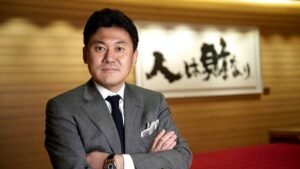
| Full Name | Hiroshi Mikitani |
|---|---|
| Known As | Mickey Mikitani |
| Date of Birth | March 11, 1965 |
| Age in 2026 | 61 years old |
| Birthplace | Kobe, Hyogo Prefecture, Japan |
| Nationality | Japanese |
| Profession | Entrepreneur, investor, business executive, and author |
| Known For | Founding Rakuten |
| Company | Rakuten Group, Inc. |
| Education | Hitotsubashi University and Harvard Business School |
| Degree | MBA, Harvard Business School |
| Marital Status | Married |
| Wife | Haruko Mikitani |
| Children | Two |
| Estimated Net Worth | Billions of US dollars; estimates vary by source and date |
| Main Source of Wealth | Online retail, technology, and business ownership |
Note: Personal and financial information can change. Net worth figures are estimates, not audited disclosures of an individual’s complete assets and liabilities.
What Is Hiroshi Mikitani’s Net Worth in 2026?

Hiroshi Mikitani’s estimated net worth is in the multibillion-dollar range. Forbes’ profile displayed approximately $3.2 billion in real-time wealth on October 21, 2026. Forbes’ 2026 Japan rich list separately listed Mikitani at approximately $3.65 billion. The difference illustrates why it is important to include the source and date whenever reporting billionaire wealth.
Mikitani’s fortune is associated primarily with his business interests and his connection to Rakuten, the Japanese internet services group he founded. The value of publicly traded shares can rise or fall with the stock market, while estimates may also reflect changes in exchange rates and the valuation of other assets.
Why Do Net Worth Estimates Differ?
- Different valuation dates: A real-time billionaire profile can change as market prices move, while an annual rich list is generally compiled for a particular reporting date.
- Share prices: Changes in the market value of a founder’s publicly traded holdings can affect estimated wealth.
- Currency movements: Changes in the Japanese yen against the US dollar may affect converted wealth estimates.
- Private assets and liabilities: Different methodologies may value private investments, debt, and other holdings differently.
- Editorial methodology: Financial publications may use different data sources and calculation methods.
For these reasons, it is more accurate to describe Mikitani as a billionaire whose estimated fortune varies over time than to treat one published number as a permanent figure.
How Did Hiroshi Mikitani Make His Money?
Mikitani built his wealth through entrepreneurship, business ownership, and the expansion of Rakuten. Rather than relying on a single product or a conventional salary, his business career has been tied to creating and growing a company with operations across several digital industries.
Rakuten began as an online marketplace in Japan. Over time, the company expanded its services and entered additional markets through new businesses, acquisitions, and investments. Its ecosystem includes e-commerce, financial services, digital content, travel-related services, and communications.
1. Founding Rakuten
Rakuten is the central business behind Mikitani’s public profile. He founded the company in 1997, initially building an online shopping marketplace designed to help merchants reach customers through the internet.
The early business was considerably smaller than the international group that Rakuten became. Its marketplace model connected sellers with shoppers and gave businesses an online channel at a time when e-commerce was still developing in Japan.
2. Growing an E-Commerce Business
Online retail helped establish Rakuten as a recognizable name in Japan. The marketplace model allowed merchants to list products and connect with consumers, while the broader platform created opportunities for additional services and customer relationships.
The growth of e-commerce also connected Rakuten to wider changes in consumer behaviour. As more people adopted online shopping, the company could build on its existing marketplace and explore other digital business opportunities.
3. Expanding into Financial Technology
Rakuten’s business ecosystem extends beyond online shopping. Financial services have become an important part of the group’s operations, connecting customers with products and services such as payments, banking, and credit cards.
This diversification gives the company multiple business areas rather than making it dependent solely on retail transactions. The financial technology sector also creates opportunities to serve customers across different stages of their online and offline purchasing activities.
4. Investing in Technology and Communications
Rakuten has also invested in communications and other technology-related businesses. Its mobile network initiative represented a major strategic commitment to the telecommunications market. Building a mobile business requires substantial investment, infrastructure, and ongoing operating costs, so it also creates financial risks.
These investments illustrate an important part of Mikitani’s business story: growing a technology group can involve both opportunities and expensive challenges. The outcome of each business initiative can influence investor confidence and the market value of the wider company.
Who Is Hiroshi Mikitani?
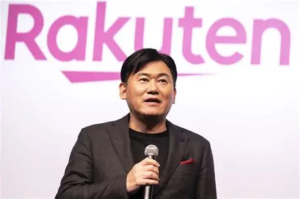
Hiroshi Mikitani is a Japanese entrepreneur best known for founding Rakuten Group. He has served as a leading executive at the company and has helped shape its strategy, international expansion, and corporate culture.
Beyond Rakuten, Mikitani has been involved in investments, business organisations, sports, and cultural institutions. His career reflects a broad interest in entrepreneurship and the role of technology in changing how companies operate.
His nickname, “Mickey,” is also used in business biographies and corporate materials. He is often discussed in connection with Japan’s digital economy and the growth of internet-based services.
Hiroshi Mikitani’s Early Life and Childhood
Mikitani was born on March 11, 1965, in Kobe, Hyogo Prefecture, Japan. His early life preceded the widespread adoption of online shopping and the mobile internet, industries that would later become central to his career.
His education in Japan helped prepare him for a professional career in business and finance. After graduating from university, he began working in investment banking before pursuing further study at Harvard Business School in the United States.
His background is relevant to understanding his later business decisions. He combined formal business education and experience in finance with an entrepreneurial interest in building a new kind of company around internet commerce.
Hiroshi Mikitani’s Education
Education played an important role in Mikitani’s professional development. He attended Hitotsubashi University in Tokyo and later earned a Master of Business Administration from Harvard Business School.
Hitotsubashi University
Hitotsubashi University is a Japanese university known for its focus on social sciences, including business and economics. Mikitani studied there before beginning his career in the financial sector.
Harvard Business School
Mikitani attended Harvard Business School and completed his MBA in 1993. The programme gave him additional exposure to management, finance, strategy, and international business perspectives.
His international education later became relevant to Rakuten’s efforts to expand beyond Japan. Understanding different business environments and communicating across markets are important challenges for any company seeking international growth.
Hiroshi Mikitani’s Career Before Rakuten
Before becoming an entrepreneur, Mikitani worked at the Industrial Bank of Japan, which was later integrated into the financial institution known as Mizuho. His banking career gave him experience in finance and the corporate environment.
After completing his MBA, he returned to Japan and continued working in the financial sector. However, his career eventually moved in a different direction. He became interested in entrepreneurship and began exploring business opportunities connected with the emerging internet economy.
The devastating Kobe earthquake in 1995 is often described in accounts of his career as a turning point. The disaster reportedly strengthened his desire to contribute to Japan’s economic revitalisation and influenced his decision to leave banking and pursue his own business.
When Did Hiroshi Mikitani Found Rakuten?
Mikitani founded the company that became Rakuten in 1997. The business initially operated under the name MDM, Inc. and launched its online marketplace, Rakuten Ichiba, in Japan that year. The company adopted the Rakuten name in 1999.
The original idea was to create an online marketplace where independent merchants could reach consumers. Rather than relying only on a traditional retail model, the platform helped businesses establish a digital presence and offer products to shoppers online.
Rakuten’s growth was part of a broader change in commerce. As internet access expanded, online marketplaces offered customers new ways to compare products and shop from home. For merchants, digital platforms created a route to customers beyond physical store locations.
How Rakuten Became a Major Japanese Technology Company
Rakuten grew from an online shopping marketplace into a wider internet services group. Its development involved expanding the range of services offered to customers and investing in businesses that could complement the original marketplace.
Marketplace and Merchant Services
The marketplace remains central to Rakuten’s identity. It provides a digital environment in which merchants can present products and connect with customers. The model gives participating businesses access to a shared platform while allowing shoppers to explore many sellers in one place.
Customer Loyalty and Digital Services
Rakuten has developed a broader ecosystem around shopping and other services. Loyalty programmes and connected offerings can encourage customers to use more than one service within the group. This strategy can strengthen customer relationships, although its effectiveness depends on service quality, competition, and financial performance.
International Expansion
Rakuten expanded internationally through acquisitions, investments, and the development of services outside Japan. Its businesses have included digital content, communications, and other online services. International expansion can help a company reach new markets, but it also introduces regulatory, operational, and competitive challenges.
Hiroshi Mikitani’s Leadership at Rakuten
Mikitani is known for promoting a global outlook and encouraging Rakuten to compete beyond its home market. One of his best-known corporate initiatives was “Englishnization,” a policy that made English the company’s official internal language in 2010.
The policy reflected his belief that a shared working language could help employees collaborate across borders. It also demonstrated the challenges of organisational change: a language policy can support international communication, but employees must adapt and companies must invest in training and practical implementation.
Mikitani’s leadership has combined ambitious expansion with a willingness to enter industries that require substantial investment. The company’s experience in mobile telecommunications illustrates both the potential and the risks of this approach.
Rakuten’s Mobile Business and Financial Challenges
Rakuten’s mobile service has been one of its major strategic investments. Entering telecommunications is different from operating an online marketplace because mobile networks require significant infrastructure, technical expertise, spectrum access, and continuous capital spending.
The business has faced financial pressure as Rakuten invested in building its network and competing with established Japanese telecommunications providers. These costs matter when evaluating the company’s financial position and the potential changes in Mikitani’s estimated wealth.
For the 2025 financial year, Forbes’ profile noted that Rakuten reported a net loss of approximately $1.1 billion on revenue of about $16.1 billion, marking its seventh consecutive year of losses. This company-level information provides context, but it should not be confused with Mikitani’s personal net worth.
A company’s revenue, profit or loss, market capitalisation, and a founder’s personal wealth are different measures. An investor should examine each separately rather than assuming that a billionaire’s wealth rises whenever the company reports higher revenue.
Hiroshi Mikitani’s Investments and Business Interests
Mikitani’s public business profile extends beyond the core online marketplace. Rakuten has pursued investments and partnerships in digital services, financial technology, communications, and other sectors. These activities reflect the company’s broader strategy of building a connected internet services ecosystem.
Rakuten has made international investments and acquired businesses in different markets. Such moves can provide access to new customers, technology, or expertise. They can also carry risks if a business fails to grow as expected or if market conditions change.
Investment in Lyft
Rakuten invested in the US ride-hailing company Lyft. Forbes’ profile notes that a $300 million investment resulted in losses and that Mikitani stepped down from Lyft’s board in 2020. The example illustrates that even large technology companies can make investments that do not produce the expected financial results.
It is important to distinguish a company’s investment decisions from an individual’s direct personal investments unless a reliable source clearly establishes the ownership and financial details.
Hiroshi Mikitani’s Wife and Family
Hiroshi Mikitani is married to Haruko Mikitani. Public biographical sources report that they married in 1993 and have two children. Compared with his business career, relatively limited verified information is publicly available about his family’s private life.
Mikitani’s professional responsibilities have involved leading a large international business group while maintaining a family life in Japan. However, details about family members should be handled carefully, and private information should not be assumed when it has not been reliably reported.
Hiroshi Mikitani’s Age and Date of Birth
Hiroshi Mikitani was born on March 11, 1965. He turned 61 in March 2026. His career has spanned several major stages in technology: the early development of the commercial internet, the rise of e-commerce, the growth of digital financial services, and the expansion of mobile connectivity.
His age is a straightforward biographical detail, but it should not be confused with his professional experience. His business career began in banking before he founded Rakuten in 1997, giving him decades of experience in finance, technology, and corporate leadership.
Hiroshi Mikitani’s Nationality
Mikitani is Japanese and was born in Kobe, Japan. His career has included international education, overseas investments, and the expansion of Rakuten’s services beyond its domestic market.
His international outlook has been reflected in Rakuten’s corporate strategy and its use of English as an internal business language. Nevertheless, his nationality and birthplace remain distinct from the countries in which Rakuten operates or invests.
Hiroshi Mikitani’s Books and Business Ideas
Mikitani has also written about business, competition, and entrepreneurship. His books and public commentary discuss ideas about innovation, leadership, and Japan’s position in the global economy.
His published work includes Marketplace 3.0: Rewriting the Rules of Borderless Business and The Power to Compete, written with Ryoichi Mikitani. These works explore themes connected with global business and economic competitiveness.
His writing complements his work as an executive by presenting his views on how businesses can adapt to technological change and international competition. Readers should distinguish an author’s own arguments from independent assessments of whether a particular business strategy has succeeded.
Hiroshi Mikitani’s Philanthropy
Mikitani has been associated with philanthropic activity. One widely reported example occurred in February 2022, when he announced a donation of one billion Japanese yen to support Ukraine following Russia’s invasion.
Philanthropy can be an important part of a public business leader’s activities, but individual donations should be attributed to reliable reporting. A donation also does not directly establish a person’s overall net worth, which is calculated using a different set of financial considerations.
Awards and Recognition
Mikitani has received recognition for his work in business and international relations. Among the honours noted in public biographies are the Harvard Business School Alumni Achievement Award in 2012 and France’s Legion of Honour in 2014.
Such awards recognise aspects of his professional and public contributions. They are separate from financial rankings, which measure estimated wealth rather than leadership, entrepreneurship, or public service.
What Makes Hiroshi Mikitani’s Business Story Important?
Mikitani’s career is significant because it illustrates how an entrepreneur can build a company around a new technology and then expand into related industries. When Rakuten began, online shopping was not yet as deeply integrated into everyday life as it is today. The company helped develop a marketplace model that connected merchants and consumers through the internet.
His career also highlights the risks of diversification. Entering additional sectors can create new revenue opportunities, but it can require substantial investment and expose a company to unfamiliar competitors. Rakuten’s experience in telecommunications shows why strategic ambition needs to be evaluated alongside operating costs and financial results.
For entrepreneurs, the broader lesson is not that every expansion succeeds. Rather, building a long-lasting business requires a clear value proposition, a willingness to adapt, and careful management of the financial risks associated with growth.
Hiroshi Mikitani Net Worth Compared with Company Revenue
Net worth and company revenue measure different things. Revenue is the income a company generates from its business activities during a period. Net worth is an estimate of an individual’s assets minus liabilities. A billionaire’s wealth may include company shares, private investments, and other assets, rather than money held in a bank account.
For this reason, Rakuten’s annual revenue cannot be used as a direct substitute for Mikitani’s personal wealth. Nor does a reported company loss necessarily mean that the founder’s net worth falls by the same amount. The effect depends on ownership, market prices, liabilities, and other factors.
When researching Hiroshi Mikitani’s net worth, readers should look at the publication date, valuation method, and source behind each estimate. Forbes’ real-time profile and its annual Japan rich list are useful reference points, but their figures should be labelled according to the relevant date.
Frequently Asked Questions About Hiroshi Mikitani
1. What is Hiroshi Mikitani’s net worth in 2026?
Forbes displayed an estimated net worth of about $3.2 billion as of October 21, 2026. Its 2026 Japan rich list reported approximately $3.65 billion. The estimates differ by source and valuation date, and they may change with market conditions.
2. How did Hiroshi Mikitani become rich?
He built his fortune primarily through founding and leading Rakuten, a Japanese internet services company with operations in e-commerce, financial technology, digital content, and communications.
3. Who is Hiroshi Mikitani?
Hiroshi Mikitani is a Japanese entrepreneur and the founder of Rakuten Group. He is known for expanding the company from an online marketplace into a wider digital services business.
4. How old is Hiroshi Mikitani?
He was born on March 11, 1965, and is 61 years old in 2026.
5. Who is Hiroshi Mikitani’s wife?
His wife is Haruko Mikitani. Public biographical sources report that they married in 1993.
6. How many children does Hiroshi Mikitani have?
Public biographical sources report that he has two children.
7. What did Hiroshi Mikitani study?
He attended Hitotsubashi University in Japan and earned an MBA from Harvard Business School in 1993.
8. When did Hiroshi Mikitani found Rakuten?
He founded the business that became Rakuten in 1997. Its online marketplace, Rakuten Ichiba, launched in Japan that year.
9. What is Rakuten known for?
Rakuten is known for e-commerce and a wider collection of internet services, including financial technology, digital content, and communications.
10. Is Hiroshi Mikitani’s net worth the same as Rakuten’s value?
No. Rakuten’s company value and Mikitani’s personal net worth are different measures. His estimated wealth depends on his personal assets, liabilities, business interests, and the valuation methods used by financial publications.
11. Where was Hiroshi Mikitani born?
He was born in Kobe, Hyogo Prefecture, Japan.
12. Why do Forbes and other sources report different net worth figures?
Estimates can differ because of publication dates, stock prices, currency exchange rates, valuation methods, and the treatment of private assets and liabilities.
Conclusion
Hiroshi Mikitani’s net worth reflects decades of entrepreneurship and his connection to Rakuten, the Japanese internet services company he founded in 1997. His career has moved from investment banking to e-commerce and then into a wider range of technology-driven businesses.
His story includes both ambitious expansion and financial challenges. Rakuten’s development shows how an online marketplace can grow into a diversified business group, while its investments in areas such as telecommunications demonstrate the risks involved in competing across industries.
For readers researching Hiroshi Mikitani’s wealth, the most reliable approach is to use dated estimates from established financial publications and distinguish personal net worth from company revenue, market value, and annual profits or losses. His influence on Japan’s digital economy remains an important part of his business legacy.
References
Readers interested in other influential business leaders can also explore Dilip Shanghvi’s net worth and learn about his success in the pharmaceutical industry.
- Forbes: Hiroshi Mikitani Profile and Net Worth — billionaire profile and wealth estimate.
- Wikipedia: List of Japanese People by Net Worth — overview of Japanese wealth rankings and related references.
- Forbes: Japan’s Billionaires — annual ranking of wealthy individuals in Japan.
- WealthRank: Hiroshi Mikitani — additional net worth and ranking information.
- Celebrity Net Worth: Hiroshi Mikitani — an additional estimate of his wealth and biography.